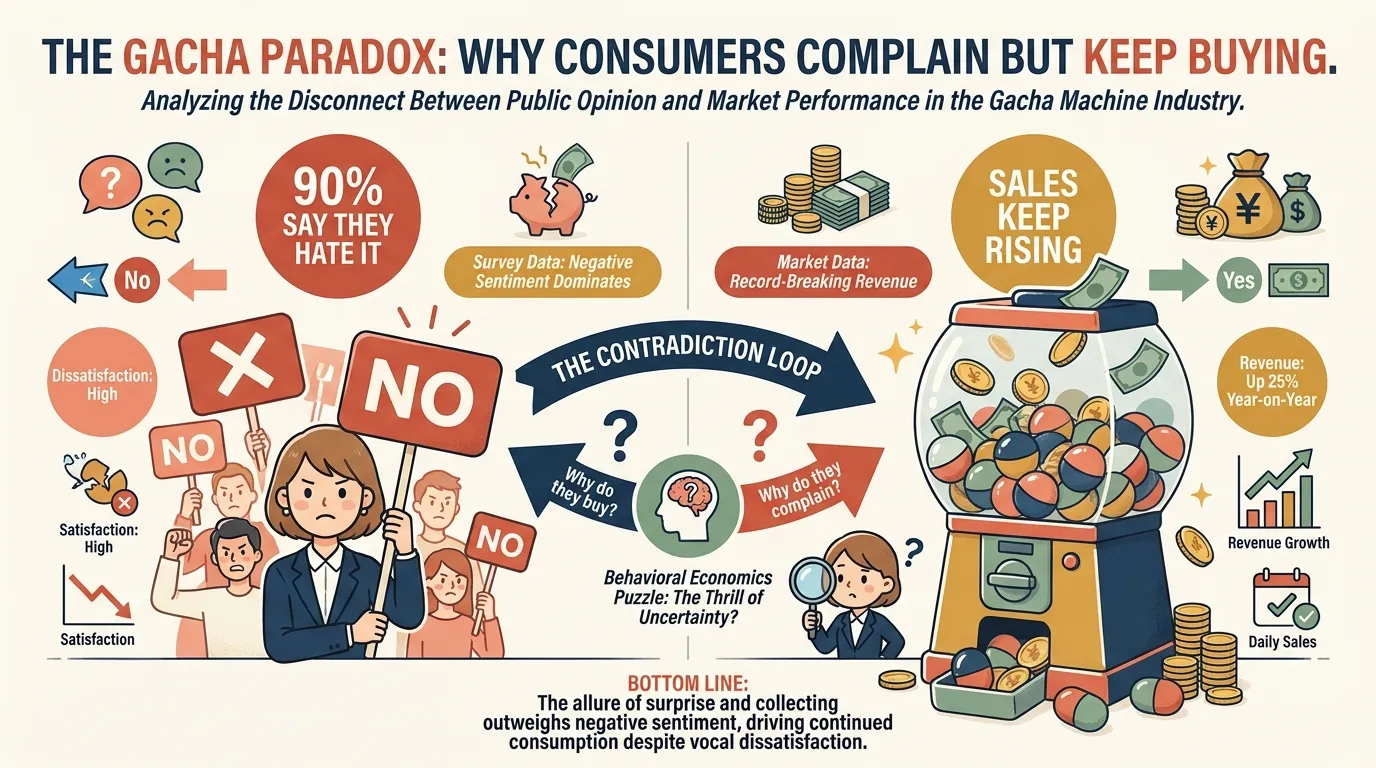
Stated vs. Revealed Preference(Stated vs. Revealed Preference)
The gap between the preferences people report in surveys or interviews (stated preference) and the preferences evidenced by their actual choices and purchases (revealed preference). Economist Paul Samuelson formalized revealed preference theory in 1938, arguing that behavior — not self-report — is the true signal of what people value.
Survey responses tend to reflect idealized or socially desirable self-images, while purchasing behavior reflects impulse, desire, and habit. This divergence is frequently observed in consumer research, particularly when a product is perceived as ethically questionable but remains commercially successful.